
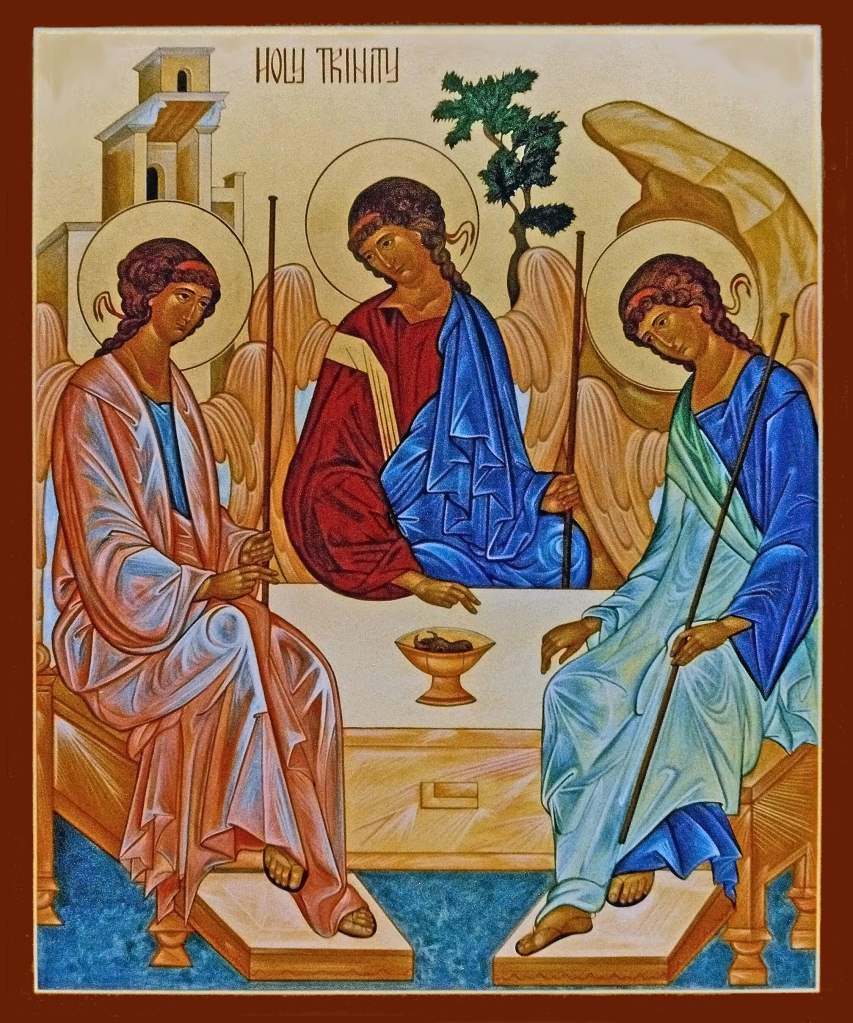
The Church began to engage in discussions and formulate its understanding of the Holy Trinity in the early centuries of Christianity. While the term “Trinity” does not appear explicitly in the New Testament, the seeds of the Trinitarian doctrine can be found in the teachings of Jesus and the writings of the apostles.
The formal development and clarification of Trinitarian doctrine emerged in response to various theological controversies and heresies that arose in the early centuries. Some key milestones in the Church’s discussion of the Trinity:
- New Testament Era: The New Testament provides glimpses of the Trinitarian nature of God, such as the baptism of Jesus (Matthew 3:16-17) and the Great Commission (Matthew 28:19). The writings of the apostles, especially those of Paul and John, emphasize the divinity of Jesus Christ and the role of the Holy Spirit in the life of believers.
- Early Ecumenical Councils: The first major council that addressed Trinitarian issues was the First Council of Nicaea in 325 AD. This council was called primarily to respond to the Arian heresy, which denied the full divinity of Jesus Christ. The council formulated the Nicene Creed, which affirmed the Son’s consubstantial (of the same substance) nature with the Father.
- Council of Constantinople: The Council of Constantinople in 381 AD further clarified and expanded the Nicene Creed. It affirmed the divinity of the Holy Spirit and articulated the equality and co-eternity of the three Persons of the Trinity—the Father, the Son, and the Holy Spirit.
- Council of Ephesus: The Council of Ephesus in 431 AD addressed the heresy of Nestorianism, which questioned the unity of Christ’s divine and human natures. The council affirmed that Jesus Christ is one Person with two natures—divine and human—and that the two natures are united in the hypostatic union without confusion or separation.
- Council of Chalcedon: The Council of Chalcedon in 451 AD further clarified the Church’s understanding of the person of Christ. It affirmed that Jesus Christ is “truly God and truly man” in two distinct but inseparable natures, without mixture, confusion, or change.
These early ecumenical councils played a crucial role in articulating the Church’s understanding of the Holy Trinity and clarifying its teachings in response to various heresies. The doctrines and formulations developed during these councils continue to be upheld by the Catholic Church and many other Christian traditions today.
Several early Church theologians played significant roles in discussing and formulating the Trinitarian doctrine. While it’s challenging to attribute the concept to specific individuals, the following theologians made notable contributions to the early development of Trinitarian thought:
- Tertullian (c. 155-240 AD): Tertullian, an early Christian writer and theologian, is often credited with coining the term “Trinity” (Trinitas in Latin). He explored the relationship between the Father, Son, and Holy Spirit, emphasizing their distinct identities within the Godhead. Tertullian’s writings influenced subsequent theologians and laid the groundwork for future discussions on the Trinity.
- Origen (c. 185-254 AD): Origen, an Alexandrian theologian, made significant contributions to Trinitarian theology. He emphasized the eternal generation of the Son from the Father and the eternal procession of the Holy Spirit from the Father. Origen’s writings explored the unity and diversity within the Trinity, asserting the equality and co-eternity of the three Persons.
- Athanasius (c. 296-373 AD): Athanasius, the Bishop of Alexandria, played a vital role in defending the divinity of Christ against the Arian heresy. He emphasized the consubstantial (of the same substance) nature of the Son with the Father, arguing for the Son’s equality and eternal existence. Athanasius’s writings and his involvement in the Council of Nicaea greatly influenced the formulation of the Nicene Creed.
- Basil the Great (c. 329-379 AD): Basil, along with his close friend Gregory of Nazianzus and his brother Gregory of Nyssa, contributed to the theological understanding of the Trinity. They emphasized the unity of essence (substance) and the distinction of Persons within the Trinity. Basil’s writings, particularly his work “On the Holy Spirit,” helped shape the Church’s understanding of the Holy Spirit’s divinity.
- Augustine of Hippo (354-430 AD): Augustine, one of the most influential Church Fathers, developed a comprehensive Trinitarian theology. He explored the inner life of the Trinity, emphasizing the mutual love and interrelationship between the Father, Son, and Holy Spirit. Augustine’s writings, such as “On the Trinity,” contributed significantly to the Church’s understanding of the Trinity and influenced later theologians.
These theologians, among others, engaged in theological discussions, debated various concepts, and sought to articulate the Church’s understanding of the Holy Trinity. Their writings and teachings formed the foundation for the Trinitarian doctrine that would be further developed in subsequent centuries and ecumenical councils
During the early Church’s discussions on Trinitarian doctrine, several heretical movements emerged, challenging the orthodox understanding of the Trinity. Here are some of the significant heretical movements that arose:
- Arianism: Arianism, named after its main proponent Arius (c. 250-336 AD), denied the full divinity of Jesus Christ. Arius taught that the Son (Jesus) was a created being and not equal in essence with the Father. This view undermined the co-equality and co-eternity of the Father and the Son. Arianism was condemned as a heresy at the First Council of Nicaea in 325 AD, leading to the formulation of the Nicene Creed to affirm the divinity of Christ.
- Sabellianism/Modalism: Sabellianism, also known as Modalism or Monarchianism, was associated with Sabellius (c. 215-250 AD) and others. This heresy emphasized the unity of God to the extent of denying the distinctiveness of the three Persons of the Trinity. According to Sabellianism, the Father, Son, and Holy Spirit were mere modes or manifestations of one divine Person, rather than three distinct Persons in a unified Godhead. The Church rejected this view as it undermined the distinction and coexistence of the three Persons.
- Macedonianism/Pneumatomachianism: Macedonianism, also known as Pneumatomachianism, emerged in the late 4th century and denied the divinity of the Holy Spirit. This heresy, associated with Macedonius I, argued that the Holy Spirit was a created being and subordinate to the Father and the Son. The Church, particularly at the Council of Constantinople in 381 AD, affirmed the divinity of the Holy Spirit and condemned Macedonianism.
- Nestorianism: Nestorianism, associated with Nestorius (c. 386-450 AD), concerned the nature of Christ and His relation to the divine and human aspects. Nestorius taught that there were two separate persons within Christ—one divine and one human—rather than one Person with two natures. This view undermined the unity and hypostatic union of Christ’s divinity and humanity. Nestorianism was condemned as a heresy at the Council of Ephesus in 431 AD.
The efforts to combat these heresies significantly contributed to the development of Trinitarian doctrine in the early Church.
 The Theology Corner
Leave a comment